Carbon-fiber composite cylinders are widely used in breathing apparatus, firefighting, rescue, diving, and other high-pressure gas applications. Compared with conventional metal cylinders, they can offer a significant weight advantage while providing the pressure performance required for their intended use.
However, a carbon-fiber cylinder is not maintenance-free. Its long-term condition depends on proper handling, suitable cleaning, correct filling and storage, regular inspection, and timely action when damage is found.
Unlike a conventional aluminum cylinder, a fully wrapped carbon-fiber cylinder uses a composite layer as its main pressure-bearing structure. Damage to this layer may not always be easy to identify from the outside. Therefore, maintaining a carbon-fiber cylinder requires an understanding of its construction and the types of damage that may affect it.
This article explains how to maintain carbon-fiber cylinders step by step, from daily handling to professional inspection and long-term storage. The specific requirements for each cylinder must always follow its manufacturer’s instructions, approved design, and applicable regulations.
1. Understand the Cylinder Structure Before Maintenance
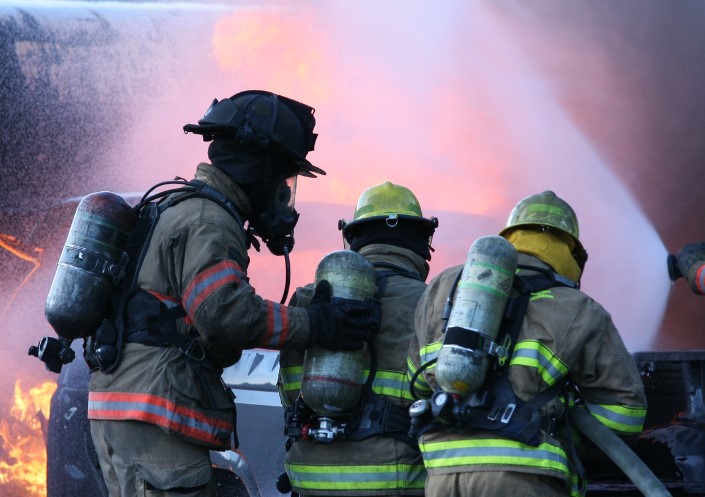
The first step in proper maintenance is understanding the main parts of the cylinder.
1.1 Liner
The liner forms the internal gas container. Depending on the cylinder type, it may be made of aluminum or a polymer such as PET.
In a Type 3 cylinder, the aluminum liner contributes to the pressure-bearing structure, together with the composite reinforcement.
In a Type 4 cylinder, the polymer liner mainly contains the gas, while the carbon-fiber composite layer carries most of the pressure load.
The liner must remain suitable for gas containment. It should not be exposed to incompatible chemicals, excessive temperatures, or vacuum conditions that may cause damage.
1.2 Carbon-fiber composite layer
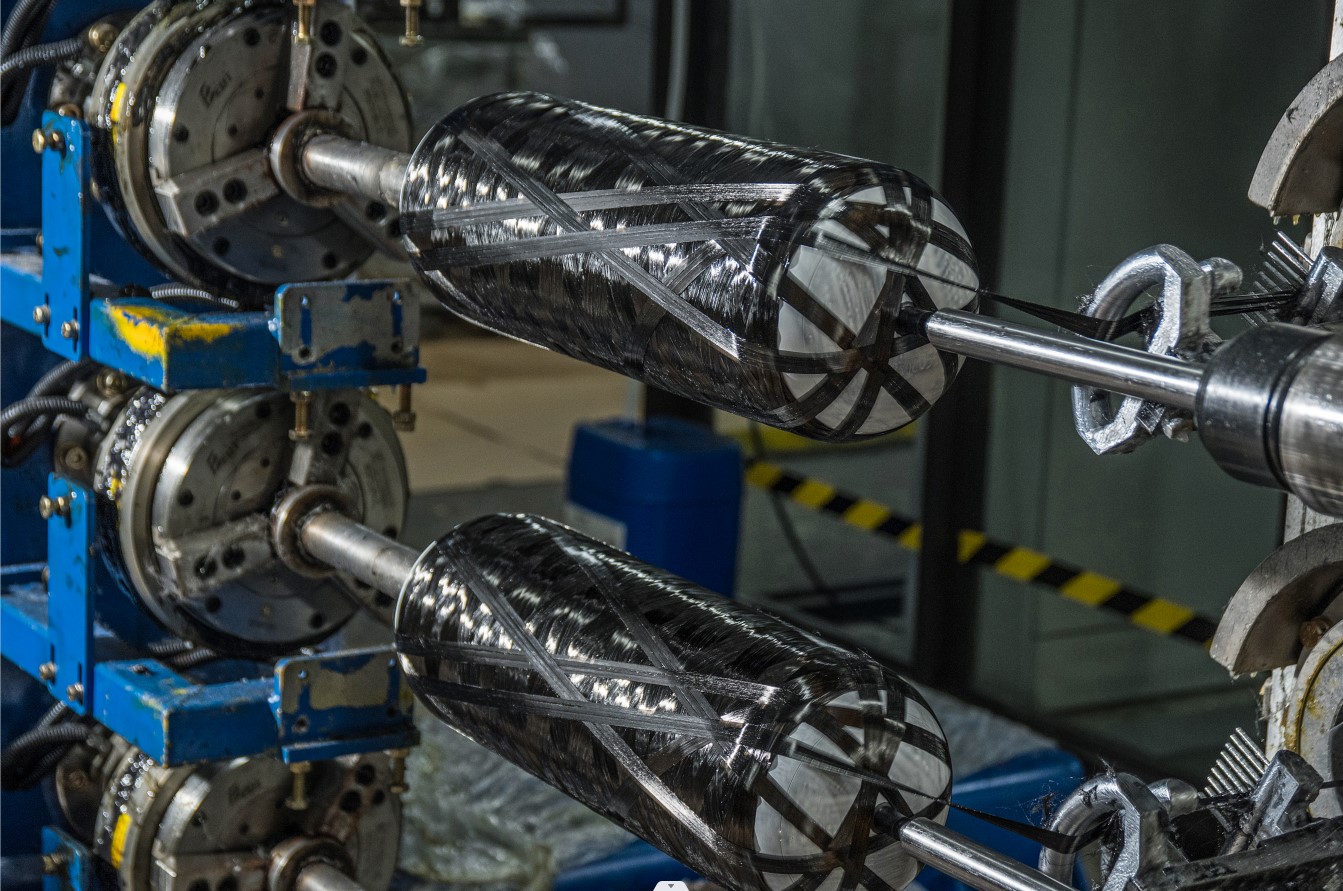
The carbon fibers are embedded in a resin matrix and wound around the liner. This composite layer provides the main pressure-bearing strength in a fully wrapped cylinder.
The composite structure can provide high strength at relatively low weight. However, impact, deep scratches, cuts, excessive heat, and chemical attack may damage it.
Unlike some damage to a metal cylinder, damage to a composite cylinder may not always be obvious. A cylinder that looks acceptable at first glance should not automatically be considered safe if it has experienced a serious impact.
1.3 Protective coating, cap, and boot
Depending on the design, a cylinder may have a protective coating, glass-fiber outer layer, rubber boot, or protective cap.
These components help reduce abrasion and protect the cylinder from some forms of external damage. They do not make the cylinder resistant to every impact, chemical, or temperature condition.
A damaged coating should be assessed to determine whether the damage is limited to the finish or has reached the structural composite layer.
2. Handle the Cylinder Correctly During Daily Use
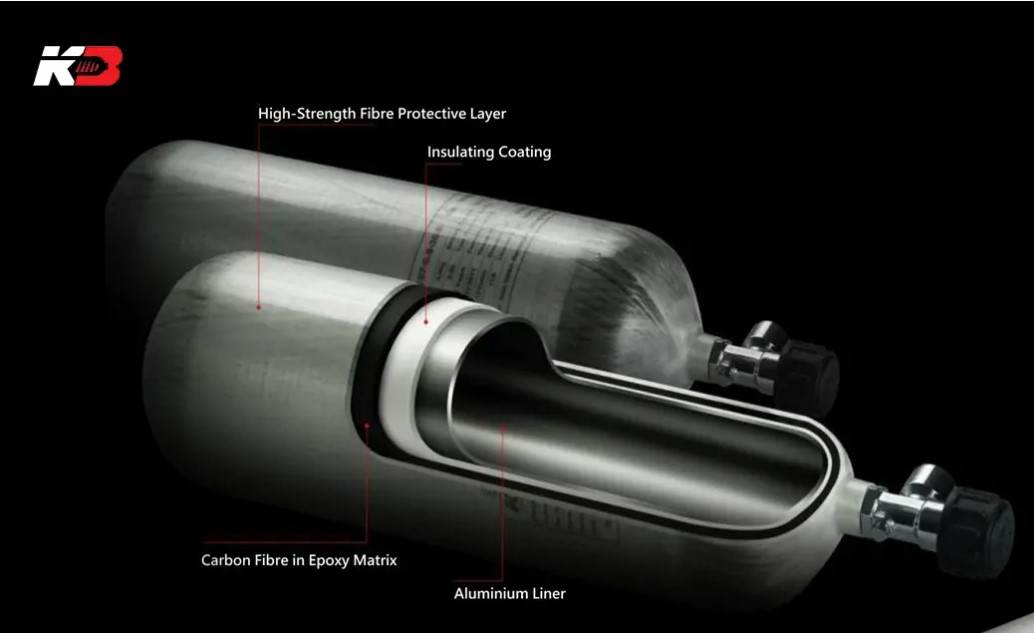
Proper handling is one of the simplest ways to reduce damage and extend the useful service period of a cylinder.
2.1 Avoid dropping and impact
Do not throw, drop, or deliberately strike a cylinder. Avoid letting it fall against hard floors, metal frames, vehicle doors, or other equipment.
Even if the outer coating appears intact, a strong impact may have damaged the composite structure underneath.
If a cylinder is dropped or suffers a significant impact, remove it from service and arrange an assessment according to the manufacturer’s instructions. Do not return it to service simply because no obvious damage can be seen.
2.2 Do not roll or drag the cylinder
Dragging a cylinder across a floor may cause scratches and abrasion. Rolling it can also lead to uncontrolled impacts against walls, equipment, or other cylinders.
Use an appropriate carrying method, trolley, or protective packaging when moving cylinders.
2.3 Do not lift the cylinder by its valve
The valve is a connection component, not a lifting handle. Lifting a cylinder by the valve may place unnecessary loads on the valve connection and surrounding structure.
Hold the cylinder using its approved carrying points or suitable handling equipment.
2.4 Protect the cylinder during installation
When fitting a cylinder into an EEBD, EEBA, SCBA, or other equipment, make sure the mounting system does not apply excessive pressure to one small area of the cylinder.
Check that brackets, straps, and retaining components are correctly positioned. Hard edges, loose metal parts, and poorly fitted mounts may damage the outer coating during repeated use.
The cylinder should be secure without being subjected to unnecessary local loads.
3. Inspect the Cylinder Before and After Use
Regular visual inspection helps identify damage before a cylinder is returned to service.
The inspection should be appropriate to the cylinder type and should follow the manufacturer’s instructions. A routine visual check is not a replacement for required professional inspections or pressure testing.
3.1 Check the outer surface
Look for:
- Deep scratches or cuts;
- Cracks or unusual surface changes;
- Exposed or damaged fibers;
- Blistering or bulging;
- Peeling or damaged protective layers;
- Signs of heat exposure;
- Chemical stains or corrosion;
- Evidence of impact or crushing.
Pay particular attention to the shoulder, base, neck area, and places where the cylinder contacts mounting brackets.
3.2 Check the valve and connection area
Inspect the valve, visible threads, sealing area, and surrounding cylinder structure for obvious damage.
Look for leakage, loose components, damaged threads, or signs that the valve has been subjected to impact.
Do not attempt to tighten or remove a valve unless you are authorized and have the correct equipment and procedures.
3.3 Check labels and markings
Make sure the cylinder’s identification, working pressure, gas specification, manufacturing information, and inspection status remain readable.
If important markings are missing or illegible, contact the manufacturer or an authorized inspection organization for guidance.
3.4 Record unusual events
A simple maintenance record can help identify repeated problems. Record significant impacts, suspected chemical exposure, abnormal temperatures, leakage, repairs, and inspection results.
For equipment used in emergency services, industrial facilities, or fleet operations, keeping a record for each cylinder is particularly useful.
4. Know When a Cylinder Must Be Removed from Service
Not all damage has the same level of seriousness. A small mark on a protective finish may be different from a cut that reaches the composite layer.
However, users should not make a final structural assessment based only on appearance.
4.1 Minor damage to the protective finish
Some scratches or marks may affect only the external protective layer. If the underlying composite structure is confirmed to be intact, the damage may be classified as superficial.
The manufacturer’s inspection procedure should determine whether the cylinder can remain in service.
4.2 Suspected composite damage
If a scratch, cut, crack, impact mark, or other defect may have reached the composite layer, stop using the cylinder and arrange professional assessment.
Do not cover the damage with paint, adhesive, tape, or a new protective sleeve in an attempt to make the surface look normal.
4.3 Severe damage
The following conditions require particular attention:
- Severe impact damage;
- Significant cuts or cracks in the composite;
- Delamination or separation between layers;
- Damage caused by excessive heat;
- Chemical attack;
- Structural damage around the neck or valve area.
A cylinder with suspected structural damage should not be filled or used until it has been assessed by the manufacturer or an authorized organization. If the applicable damage criteria require rejection, it must not be returned to service.
Important: Never attempt to repair a damaged pressure-bearing composite layer yourself.
5. Clean the Cylinder Using Suitable Materials
Cleaning removes dust, dirt, sweat, and other contaminants that may damage the surface or hide defects.
However, cleaning products must be compatible with the cylinder’s liner, resin system, protective coating, seals, and other components.
5.1 External cleaning
For routine external cleaning, a mild soap or dishwashing detergent and clean water are generally suitable when permitted by the manufacturer.
A practical procedure is:
- Check that the cylinder can be cleaned safely in its current condition.
- Apply a mild cleaning solution using a soft cloth or sponge.
- Avoid aggressive scrubbing with abrasive pads or hard brushes.
- Rinse thoroughly to remove detergent residue.
- Dry the cylinder with a clean, soft cloth or allow it to dry under suitable conditions.
- Inspect the surface again after cleaning.
Use the temperature limit specified by the cylinder manufacturer. For the Type 4 cylinder described in the referenced manual, external cleaning water should not exceed 45°C.
5.2 Avoid unsuitable chemicals
Do not use corrosive cleaners, strong solvents, or other chemicals unless their compatibility with the complete cylinder assembly has been confirmed.
A chemical may appear to clean the surface effectively while damaging the resin, coating, liner, or seals.
If a cylinder has been exposed to an unknown chemical, do not assume that washing it will restore its original condition. Seek advice from the manufacturer.
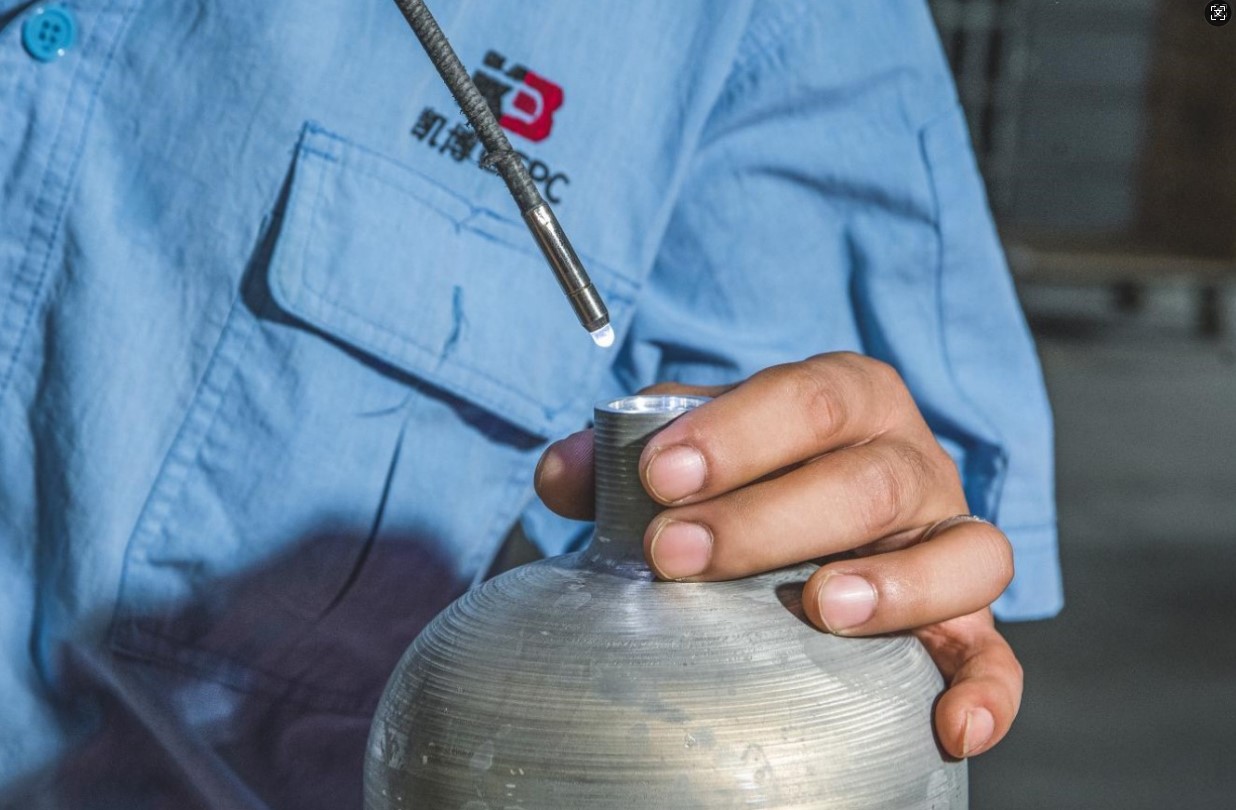
5.3 Internal cleaning
Internal cleaning is not an ordinary user task. It may be required during authorized maintenance or following contamination.
Where the manufacturer permits internal cleaning, use only approved cleaning materials. Avoid chemicals that are incompatible with the liner, and do not insert solid tools or abrasive materials into the cylinder.
The referenced Type 4 manual recommends mild soap and water where appropriate, thorough rinsing, and drying with clean, dry, oil-free air. It specifies warm drying air at no more than 60°C.
These values are specific to that manual and should not be assumed to apply to every composite cylinder.
6. Maintain Correct Filling and Pressure Conditions
Filling practices can affect both cylinder condition and safe operation.
6.1 Use only the approved gas
Always confirm the gas specified for the cylinder and the complete equipment.
A cylinder approved for breathable compressed air must not automatically be used for oxygen or another gas. Gas compatibility, valve design, cleanliness, and applicable approval requirements must all be considered.
6.2 Do not exceed working pressure
Never fill a cylinder above its marked working pressure.
The test pressure is used for specified testing procedures. It is not the permitted routine filling pressure.
For example, a cylinder marked with a working pressure of 300 bar and a test pressure of 450 bar must not be routinely filled to 450 bar.
6.3 Fill at the recommended rate
Rapid filling can cause the cylinder and its internal components to heat up. Follow the manufacturer’s recommended filling rate and temperature limits.
For the particular Type 4 cylinder covered by the referenced manual, the recommended filling rate is below 30 bar per minute, and the cylinder temperature during filling must not exceed 60°C.
These are model-specific figures, not universal limits for all carbon-fiber cylinders.
6.4 Avoid improper cooling methods
Do not assume that immersing a cylinder in water during filling is acceptable. The referenced manual specifically prohibits this practice for the model it covers.
Use the filling procedure approved for the particular cylinder rather than improvising a cooling method.
6.5 Avoid excessive discharge rates
Rapid discharge can cool components, affect internal conditions, and shorten service life under some operating conditions.
Follow the manufacturer’s discharge-rate limits. The referenced manual recommends a maximum discharge rate of 260 L/min for its specified model.
7. Prevent Vacuum Conditions in Type 4 Cylinders
Vacuum is an important consideration for Type 4 cylinders because of their polymer liner.
If the internal pressure falls too low while external pressure remains higher, the liner may deform inward. Depending on the design and the extent of deformation, this may affect the liner’s condition.
For the Type 4 cylinder covered by the referenced manual:
- Do not apply a vacuum to the cylinder.
- Do not store it completely empty.
- Maintain internal pressure above 2 bar where the manual requires it.
- Avoid draining water using a procedure that creates a vacuum.
The manual describes a particular procedure for draining water: place the cylinder horizontally, invert it at approximately 45 degrees, and then invert it vertically to complete drainage.
This sequence is model-specific. Other cylinders may have different approved procedures.
Do not assume that a low-pressure or deformed liner can always be restored safely by simply adding gas. If the liner shows bulging or other abnormal changes, follow the manufacturer’s assessment procedure.
8. Store Cylinders Under Suitable Conditions
Correct storage reduces the risk of impact, contamination, chemical damage, and deterioration of external materials.
8.1 Choose a clean and dry location
Store cylinders in a clean, dry area away from corrosive substances, oils, solvents, and other chemicals that may be incompatible with the cylinder.
Avoid locations where water can collect around the valve or neck area.
8.2 Prevent movement and impact
Secure cylinders in a stable position so that they cannot roll, fall, or strike other equipment.
Use suitable racks or restraints that do not damage the cylinder surface.
8.3 Control temperature
Follow the cylinder manufacturer’s storage-temperature limits.
The referenced Type 4 manual specifies an ambient storage range of -30°C to 60°C. This range applies to the model described in that manual; it is not a universal specification for every composite cylinder.
Avoid exposing cylinders to fires, heaters, hot vehicle interiors, or other sources of excessive heat.
8.4 Maintain the required residual pressure
Some cylinders must be stored with a minimum internal pressure to reduce the risk of contamination or other problems.
For the model described in the referenced manual, storage pressure should remain above 2 bar. Do not automatically apply this value to a different model unless its instructions support it.
8.5 Keep records of stored cylinders
For equipment fleets, record the cylinder identification, storage location, inspection date, and any maintenance action. Periodically check stored cylinders for visible damage, leakage, and compliance with the manufacturer’s storage instructions.
9. Transport Cylinders with Adequate Protection
Transport is a common source of avoidable impact and surface damage.
Before transportation:
- Check that the cylinder is in an acceptable condition.
- Protect the valve and exposed surfaces.
- Use sturdy packaging or an approved carrying system.
- Prevent cylinders from moving inside the vehicle or package.
- Keep cylinders away from incompatible chemicals and sources of heat.
- Follow the applicable transport regulations for the gas and pressure involved.
If the manufacturer requires a particular residual pressure during transportation, follow that requirement. Do not vent a cylinder completely merely to simplify shipping unless an approved procedure specifically requires it.
10. Follow the Required Inspection and Retest Schedule
A cylinder’s condition cannot be determined from its manufacturing date or external appearance alone.
The required inspection and retest schedule depends on the cylinder design, approval, intended use, jurisdiction, and applicable standards.
10.1 Routine visual inspection
Users should conduct the checks required before and after use. These checks help identify visible defects but do not replace professional examination.
10.2 Periodic professional inspection
A qualified inspection organization should assess the cylinder according to the applicable requirements. Composite cylinders may require specific procedures for identifying damage to the fiber layer and other structural components.
10.3 Pressure testing and leakage checks
Only use the testing methods and intervals approved for the specific cylinder. Do not assume that a testing procedure for a metal cylinder can be transferred directly to a composite cylinder.
For example, the referenced Type 4 manual discusses hydrostatic testing according to EN 12245 and a leakage-check procedure based on ISO 11623. The applicable procedure must be confirmed for the cylinder concerned.
10.4 Non-limited design life does not mean maintenance-free operation
Some composite cylinders are marked as having a non-limited design life. This should not be interpreted as permission to use them indefinitely without inspection.
The cylinder must still satisfy the applicable inspection, retest, condition, and regulatory requirements. A damaged cylinder may need to be removed from service regardless of its age.
11. Build a Simple Maintenance System for Cylinder Fleets
For manufacturers, distributors, firefighting teams, industrial facilities, and emergency-service operators, individual care is important, but a consistent maintenance system is even more useful.
A practical system should include:
- A unique identification number for each cylinder;
- A record of manufacturing and inspection information;
- A pre-use inspection checklist;
- Records of impacts, unusual heat exposure, and chemical contact;
- Cleaning and maintenance records;
- The next inspection or retest due date;
- A clear procedure for removing damaged cylinders from service;
- A record of any professional assessment and authorized repair.
Staff should be trained to recognize defects and understand when they must stop using a cylinder.
The purpose of this system is not to create unnecessary paperwork. It is to ensure that each cylinder has a clear history and that suspected damage is not overlooked.
Frequently Asked Questions
1. Are carbon-fiber cylinders maintenance-free?
No. They may offer advantages such as lower weight and resistance to certain forms of corrosion, but they still require suitable handling, cleaning, inspection, storage, and retesting.
2. What is the most important rule for maintaining a carbon-fiber cylinder?
Prevent damage to the pressure-bearing composite structure. Avoid drops, strong impacts, deep scratches, excessive heat, and incompatible chemicals. Remove the cylinder from service if structural damage is suspected.
3. Can I continue using a cylinder if its outer coating is scratched?
Not without assessing the damage. A superficial mark may affect only the finish, but a deeper scratch may reach the composite layer. Follow the manufacturer’s damage-classification procedure.
4. Can I use ordinary detergent to clean the cylinder?
A mild detergent may be suitable for external cleaning if the manufacturer permits it. Strong solvents, corrosive cleaners, and unapproved chemicals should be avoided.
5. Can I repair a damaged carbon-fiber layer with epoxy resin?
No. Do not carry out unauthorized repairs to the pressure-bearing composite layer. The cylinder must be assessed by the manufacturer or an authorized organization.
6. Can a carbon-fiber cylinder be stored completely empty?
Follow the specific manufacturer’s instructions. Some Type 4 cylinders require a minimum residual pressure. For the model covered by the referenced manual, the stated storage pressure is above 2 bar.
7. Is a non-limited-life cylinder safe to use indefinitely?
Not automatically. Continued use depends on the cylinder’s condition, inspection results, retest requirements, and applicable regulations.
8. Does a carbon-fiber cylinder need hydrostatic testing?
The requirement and procedure depend on its design, approval, applicable standards, and local regulations. Follow the specific cylinder documentation rather than assuming the same test schedule applies to all cylinders.
9. What should I do if a cylinder is dropped?
Remove it from service and arrange an assessment according to the manufacturer’s instructions. Do not assume it is safe because the damage is not visible.
10. Can I use the same maintenance procedure for Type 3 and Type 4 cylinders?
Not in every respect. The two types have different liner structures, and the manufacturer’s instructions may specify different inspection, cleaning, pressure, and handling requirements.
11. Can excessive filling speed affect cylinder condition?
Yes. Rapid filling can increase temperature. Follow the manufacturer’s recommended filling rate and temperature limits.
12. What should I do if a cylinder has been exposed to a chemical?
Stop using it if the chemical may be incompatible with the cylinder materials. Contact the manufacturer for guidance. Cleaning the surface does not necessarily remove the risk of material damage.
13. How can a company manage a large number of cylinders efficiently?
Use identification records, inspection checklists, maintenance logs, and a clear process for removing defective cylinders from service. Staff should be trained to recognize damage and report unusual events.
14. What is the difference between daily inspection and professional inspection?
Daily or pre-use inspection identifies visible problems and unusual conditions. Professional inspection follows the applicable technical procedures and may include tests that cannot be performed by ordinary users.
15. What is the best way to extend the useful service period of a carbon-fiber cylinder?
Follow the manufacturer’s instructions consistently, prevent impacts and chemical exposure, use approved filling and cleaning procedures, maintain the required storage conditions, and complete all required inspections and retests on time.
Conclusion
Maintaining a carbon-fiber cylinder in good condition is not complicated, but it requires consistent attention to the details that matter for composite materials.
Correct handling prevents avoidable impact damage. Suitable cleaning protects the liner, composite layer, and outer finish. Proper filling and storage help maintain the cylinder’s condition, while routine inspection and professional assessment identify problems that should not be ignored.
The most important difference from conventional aluminum cylinders is that damage to a composite pressure-bearing layer may not always be obvious. Users should therefore avoid judging safety from appearance alone and should never attempt unauthorized repairs.
For individual users and organizations managing cylinder fleets, the best approach is to combine daily care with clear inspection records, trained personnel, and compliance with the manufacturer’s instructions and applicable regulations.
A well-maintained carbon-fiber cylinder is the result of correct handling, controlled operating conditions, timely inspection, and responsible maintenance—not simply the use of a strong, lightweight material.
Post time: Oct-15-2026