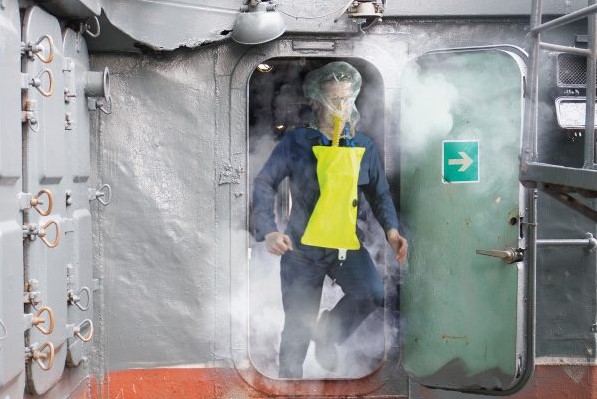
EEBD and EEBA systems are designed to provide breathable air or oxygen for emergency escape, evacuation, or short-duration respiratory protection. Because these devices are used in high-risk situations, cylinder selection cannot be based on weight alone. The cylinder must match the gas, working pressure, capacity, valve, dimensions, mounting system, and applicable safety requirements of the complete breathing apparatus.
A gradual move from traditional aluminum cylinders to carbon-fiber composite cylinders is technically possible, but it should be treated as a system-level product improvement, not simply a direct replacement of one cylinder with another. The two cylinder types have different structures, mechanical behavior, inspection requirements, and installation considerations.
The following article explains the differences, potential benefits, technical limitations, and practical points that equipment manufacturers and distributors should consider when developing or selecting carbon-fiber cylinders for EEBD/EEBA applications.
1. Understanding the Role of the Cylinder in EEBD and EEBA Equipment
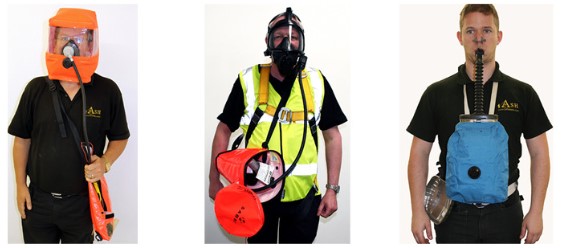
Before comparing aluminum and carbon-fiber cylinders, it is important to distinguish between the two main types of emergency breathing equipment.
-
EEBD — Emergency Escape Breathing Device: Normally designed to provide breathable air for escape from a dangerous environment. It is generally intended for short-term emergency use rather than for firefighting or prolonged work.
-
EEBA — Emergency Escape Breathing Apparatus: This term is sometimes used broadly for emergency breathing equipment. The exact design and certification requirements depend on the application, market, and relevant standard.
Depending on the equipment design, the cylinder may contain:
-
Compressed breathable air;
-
Oxygen, in systems specifically designed for oxygen storage; or
-
Another approved breathing-gas mixture.
This distinction is extremely important. A cylinder suitable for compressed air is not automatically suitable for oxygen service. Oxygen service requires appropriate material selection, cleaning, valve design, lubricants, manufacturing controls, and compatibility verification. Before selecting a cylinder, the equipment manufacturer must clearly identify the gas and confirm the applicable requirements.
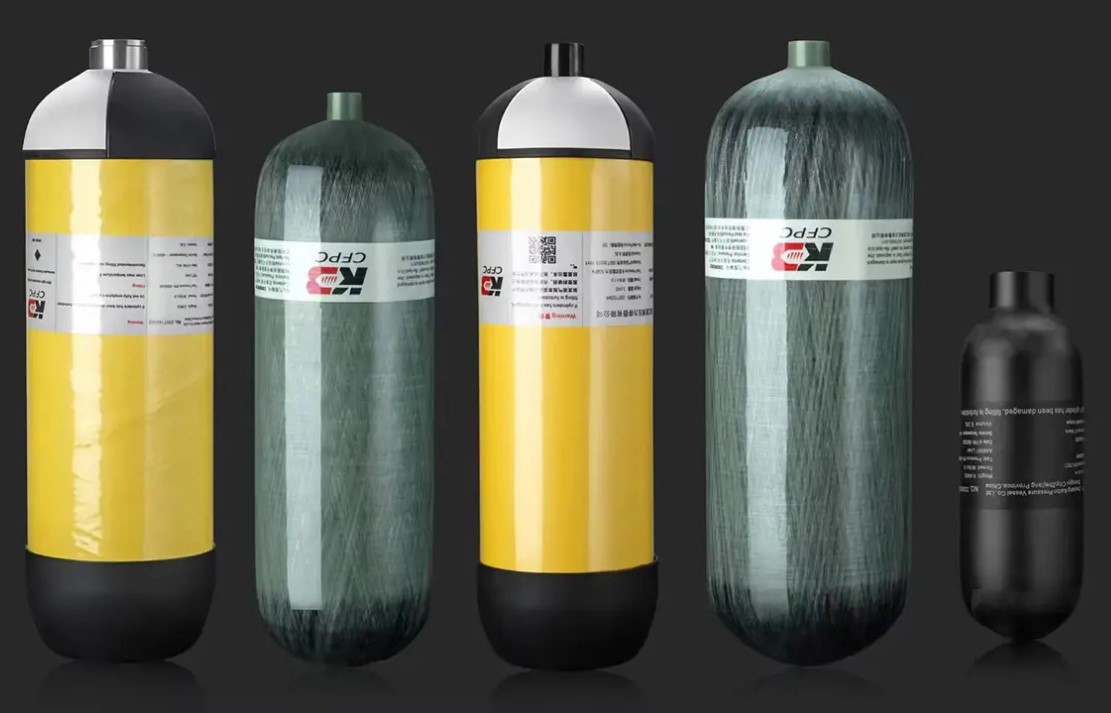
At present, many EEBD/EEBA products use pure aluminum cylinders, often with a working pressure of approximately 200 bar. At the same time, some manufacturers are introducing products equipped with carbon-fiber composite cylinders to reduce equipment weight and improve portability.
This creates an important technical question: Can a carbon-fiber cylinder replace an aluminum cylinder while keeping exactly the same dimensions, connections, installation method, and overall equipment design?
In most cases, the answer is not necessarily. Carbon-fiber cylinders can offer significant weight and design benefits, but their different construction means that the cylinder and the breathing apparatus may need to be considered together.
2. Why Pure Aluminum Cylinders Have Been Widely Used
Pure aluminum cylinders have been used in breathing equipment for many years because they offer several practical advantages.
2.1 Simple and familiar construction
A pure aluminum cylinder is generally manufactured from a metal body that directly contains the gas and carries the pressure load. The cylinder wall must be sufficiently thick to withstand the internal pressure.
The metal body therefore performs two main functions:
-
It acts as the gas container;
-
It provides the main structural strength.
This relatively simple structure makes aluminum cylinders familiar to equipment designers, filling stations, inspection organizations, and maintenance personnel.
2.2 Established production and inspection methods
Many manufacturers and service providers already have experience with aluminum cylinders. Their production, filling, inspection, and maintenance procedures are well established.
For equipment manufacturers, using aluminum may therefore reduce the need to redesign the product or change existing supply-chain procedures.
2.3 Stable dimensions and mechanical behavior
Aluminum is a relatively rigid material. Its dimensions and mechanical behavior are familiar to designers, which can make it easier to integrate into a compact EEBD or EEBA housing.
However, aluminum also has limitations. Its density is much higher than that of carbon fiber, and a metal cylinder may account for a significant part of the total weight of a portable breathing device.
3. How a Carbon-Fiber Composite Cylinder Is Different
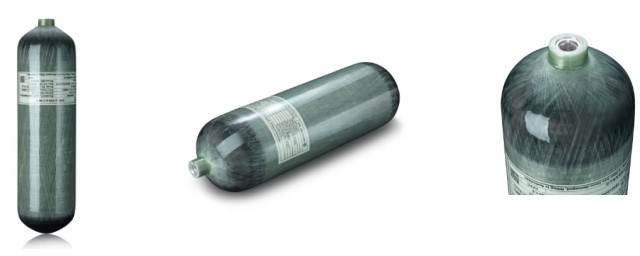
A carbon-fiber cylinder is not simply an aluminum cylinder covered with carbon fiber. Its structure and load-bearing mechanism are different.
A typical fully wrapped composite cylinder consists of several main parts:
3.1 Liner
The liner forms the internal gas-tight container. Depending on the cylinder type, the liner may be made from:
-
Aluminum;
-
PET or another polymer;
-
Another material specifically approved for the application.
In a Type 3 cylinder, the aluminum liner contributes to the structural strength, while the carbon-fiber layer provides additional reinforcement.
In a Type 4 cylinder, the polymer liner primarily holds the gas, while the carbon-fiber-reinforced composite layer carries most of the pressure load.
3.2 Carbon-fiber and resin composite layer
The carbon fibers are wound around the liner in carefully designed patterns. The fibers are embedded in a resin matrix, commonly an epoxy-based system.
This composite layer is the main pressure-bearing structure in a fully wrapped carbon-fiber cylinder.
Carbon fiber has a high strength-to-weight ratio. By placing the fibers in the directions required to resist internal pressure, engineers can achieve the required pressure performance with much less material weight than a conventional metal cylinder.
3.3 Protective outer layers
Depending on the design, the cylinder may also include:
-
A polymer protective coating;
-
A glass-fiber layer;
-
UV-resistant paint;
-
Protective sleeves;
-
Rubber caps or boots;
-
Other impact or abrasion protection.
These outer layers help protect the cylinder against scratches, abrasion, sunlight, and minor external damage. However, they should not be regarded as a substitute for proper handling and inspection.
4. Why a Carbon-Fiber Cylinder Can Be Much Lighter
The main reason for adopting carbon-fiber cylinders in EEBD/EEBA equipment is their potential to reduce weight.
Aluminum has a much higher density than carbon fiber. A metal cylinder must use a relatively thick wall to withstand internal pressure, while a composite cylinder can use high-strength fibers arranged efficiently around the liner.
At the same nominal capacity and working pressure, a carbon-fiber composite cylinder can therefore be substantially lighter than a pure aluminum cylinder.
This weight reduction can provide several practical benefits.
4.1 Easier emergency evacuation
During an emergency, the user may need to move quickly through narrow passages, stairs, ladders, or uneven areas. Reducing the weight of the breathing equipment can make movement easier.
4.2 Lower physical burden
A lighter device places less load on the user’s shoulders, neck, and back. This can be particularly useful when the equipment is carried together with protective clothing, helmets, tools, or other emergency equipment.
4.3 Improved portability and storage
A lighter cylinder can also make the equipment easier to:
-
Transport;
-
Store in emergency lockers;
-
Distribute across large facilities;
-
Carry during equipment inspections;
-
Handle during production and assembly.
4.4 Better opportunities for product redesign
Weight savings can allow an equipment manufacturer to reconsider the complete product structure. For example, the manufacturer may be able to improve the carrying system, simplify the housing, or reserve part of the weight allowance for other safety features.
However, the actual weight saving must be calculated using the complete cylinder assembly, including the liner, composite layer, protective coating, valve, caps, and other accessories. Comparing only the empty cylinder body may produce an inaccurate result.
5. Does a Carbon-Fiber Cylinder Automatically Provide Better Safety?
Carbon-fiber cylinders can offer important technical benefits, but it would be inaccurate to claim that they are automatically safer in every situation.
Safety depends on:
-
Correct design;
-
Suitable materials;
-
Proper manufacturing;
-
Appropriate certification;
-
Correct filling procedures;
-
Protection against impact and heat;
-
Regular inspection;
-
Compatibility with the breathing apparatus.
5.1 Advantages of the composite structure
A properly designed composite cylinder can offer:
-
High pressure resistance at a relatively low weight;
-
Good resistance to certain forms of external corrosion;
-
Reduced risk of metal-body corrosion;
-
Efficient use of high-strength fibers;
-
Good fatigue performance when correctly designed and manufactured.
For some applications, the absence of a large metal pressure-bearing body can also reduce concerns about certain types of metal corrosion.
5.2 Different damage behavior
However, carbon-fiber cylinders do not behave like aluminum cylinders when damaged.
An aluminum cylinder may show dents, scratches, corrosion, or other visible changes. A composite cylinder may instead experience:
-
Fiber damage;
-
Impact damage;
-
Delamination;
-
Cracks in the composite layer;
-
Heat damage;
-
Chemical attack;
-
Damage hidden beneath a protective coating.
Some composite damage may not be easy to identify through a simple visual inspection. Therefore, the inspection method must be suitable for the specific cylinder design.
The correct conclusion is:
A certified and properly maintained carbon-fiber cylinder can provide a strong combination of low weight and pressure performance, but it requires inspection and handling procedures appropriate to composite materials.
6. Why a Carbon-Fiber Cylinder Cannot Always Be Made Identical to an Aluminum Cylinder
When replacing an aluminum cylinder, an equipment manufacturer may initially request exactly the same:
-
External diameter;
-
Overall length;
-
Valve position;
-
Thread;
-
Neck structure;
-
Mounting points;
-
Protective cap;
-
Cylinder shape;
-
Connection method;
-
Weight distribution.
Some of these requirements may be achievable, but others may require modification.
6.1 Different wall construction
An aluminum cylinder relies on a metal wall to contain and resist internal pressure. A carbon-fiber cylinder uses a liner and a composite pressure-bearing layer.
The required thickness, winding pattern, end geometry, and neck design may therefore differ from those of an aluminum cylinder.
Trying to copy the external shape of an aluminum cylinder without considering the composite structure may compromise performance or make the design inefficient.
6.2 Different neck and boss structure
The valve connection area is particularly important.
A carbon-fiber cylinder may use a specially designed neck, boss, or insert to connect the valve to the liner and pressure-bearing structure. The thread, sealing surface, installation torque, and supporting structure must be compatible with the cylinder design.
The valve connection should not be treated as a simple interchangeable part.
6.3 Different deformation and load transfer
Aluminum and composite materials have different elastic properties and different responses to impact, pressure, and temperature changes.
The cylinder may therefore transfer loads to the equipment housing or mounting brackets differently. A mounting system designed for a metal cylinder may need adjustment when used with a composite cylinder.
6.4 Different weight distribution
Although the overall cylinder is lighter, its weight distribution may not be identical to that of an aluminum cylinder. The position of the valve, protective components, and composite structure can influence the balance of the complete EEBD/EEBA unit.
This may affect:
-
User comfort;
-
Stability;
-
Harness design;
-
Housing design;
-
Equipment balance during movement.
6.5 Different external protection requirements
A metal cylinder and a composite cylinder may require different protection against abrasion, impact, and contact with other equipment.
For this reason, the correct approach is not to demand that a carbon-fiber cylinder be a perfect physical copy of the aluminum version. Instead, the equipment manufacturer should define the essential interface requirements and allow the cylinder manufacturer to optimize the composite design within those limits.
7. Which Dimensions Should Remain the Same?
Although complete duplication is not always practical, certain interface requirements may need to remain unchanged.
During product development, the equipment manufacturer and cylinder supplier should clearly separate the requirements into two groups.
7.1 Requirements that may need to remain unchanged
These may include:
-
Nominal gas capacity;
-
Working pressure;
-
Required gas type;
-
Valve connection;
-
Available installation space;
-
Maximum allowable diameter;
-
Maximum allowable length;
-
Mounting position;
-
Connection to the regulator;
-
Required operating temperature range;
-
Required certification or approval;
-
Compatibility with the complete breathing apparatus.
These are functional or interface requirements and should be confirmed at the beginning of the project.
7.2 Requirements that may be optimized
Other features may be redesigned if necessary, such as:
-
Cylinder wall construction;
-
Liner material;
-
Composite winding pattern;
-
Outer protective layer;
-
Cylinder shoulder shape;
-
Protective sleeve design;
-
Local reinforcement;
-
Weight distribution;
-
Method of securing the cylinder inside the equipment.
This approach allows the carbon-fiber cylinder to deliver its main benefits without being restricted by every detail of the original aluminum-cylinder design.
8. Special Attention to Oxygen Service
If the EEBD/EEBA cylinder is intended to store oxygen rather than compressed air, the project requires additional controls.
Oxygen can react strongly with oils, greases, particles, and unsuitable materials. A cylinder that is acceptable for ordinary compressed air may not be acceptable for oxygen service.
The manufacturer should confirm at least the following points:
-
Gas compatibility: The cylinder design must be approved for the intended oxygen concentration and pressure.
-
Material compatibility: The liner, composite system, seals, valve, and other components must be suitable for oxygen service.
-
Oxygen-clean manufacturing: The manufacturing and assembly process must follow appropriate cleaning and contamination-control procedures.
-
Valve compatibility: The valve must be designed and approved for the intended gas and pressure.
-
Lubricant control: Only approved lubricants, if any, should be used.
-
Filling procedure: The filling station must follow oxygen-specific procedures, including suitable filling rates and contamination controls.
-
Traceability: The cylinder and valve should be identifiable and traceable to the relevant production and inspection records.
The words “oxygen cylinder” should therefore not be used casually in marketing material unless the complete cylinder assembly has been specifically designed and approved for oxygen use.
9. Working Pressure, Capacity, and Duration
Many existing EEBD/EEBA products use cylinders with a working pressure of approximately 200 bar. When considering carbon-fiber cylinders, the equipment manufacturer must confirm whether the existing pressure and capacity are still suitable.
A change in cylinder material does not automatically change the required gas supply.
The duration of the breathing equipment depends on several factors:
-
Internal cylinder volume;
-
Filling pressure;
-
Gas type;
-
Breathing or gas-consumption rate;
-
Regulator performance;
-
Residual pressure requirements;
-
Ambient conditions;
-
The specific equipment design.
For example, two cylinders with the same water capacity may provide different practical operating times if they are filled to different pressures or connected to different breathing systems.
The cylinder supplier should therefore not calculate duration based only on volume. The equipment manufacturer should provide the required gas quantity, rated duration, operating pressure, and residual-pressure requirements.
10. Inspection and Maintenance Considerations
The inspection procedure for a carbon-fiber cylinder should not simply copy the procedure used for an aluminum cylinder.
For aluminum cylinders, inspectors may focus on:
-
Corrosion;
-
Dents;
-
Cracks;
-
Thread damage;
-
Wall deformation;
-
General surface condition.
For composite cylinders, inspection may also need to address:
-
Cuts or scratches that reach the composite layer;
-
Impact damage;
-
Delamination;
-
Fiber exposure;
-
Blistering;
-
Heat damage;
-
Chemical damage;
-
Damage around the neck and valve area;
-
Damage hidden beneath protective coatings.
The exact inspection method depends on the cylinder design, applicable standard, and manufacturer’s instructions.
The following basic rules should be applied:
-
Do not use a cylinder with suspected structural damage.
-
Do not attempt to repair carbon-fiber damage with ordinary adhesive or paint.
-
Do not remove protective layers without authorization.
-
Do not use unsuitable chemicals for cleaning.
-
Do not expose the cylinder to excessive heat.
-
Have valve removal and installation performed by authorized personnel.
-
Follow the required periodic inspection and retest schedule.
A cylinder described as having a non-limited design life should not be understood as requiring no inspection. Continued use remains dependent on its condition, inspection results, and compliance with applicable requirements.
11. Handling, Storage, and Transportation
Carbon-fiber cylinders are lightweight, but they should not be treated as damage-proof.
The following practices are important:
During handling
-
Do not throw or drop the cylinder.
-
Do not roll or drag it across the floor.
-
Do not lift the cylinder by the valve.
-
Avoid contact with sharp edges.
-
Protect the outer surface from unnecessary abrasion.
-
Use suitable packaging during transportation.
During storage
-
Keep the cylinder in a stable position.
-
Prevent rolling and impact.
-
Store it in a clean and dry location.
-
Keep it away from corrosive chemicals.
-
Avoid excessive heat and direct exposure to damaging environmental conditions.
-
Follow the manufacturer’s requirements for residual internal pressure.
During transportation
-
Use suitable protective packaging.
-
Prevent movement inside the transport box.
-
Protect the valve and cylinder surface.
-
Comply with applicable transport regulations.
-
Follow the manufacturer’s instructions regarding internal pressure during transportation.
The lower weight of a composite cylinder is an advantage, but it does not remove the need for careful handling.
12. A Practical Development Process for Replacing Aluminum
For an EEBD/EEBA manufacturer considering a carbon-fiber cylinder, the following step-by-step process is recommended.
Step 1: Confirm the application
Clarify whether the equipment is designed for:
-
Compressed air;
-
Oxygen;
-
Another approved gas;
-
Escape only;
-
Emergency work or rescue.
Step 2: Define the basic requirements
Provide the cylinder supplier with:
-
Working pressure;
-
Required capacity;
-
Required duration;
-
Maximum diameter;
-
Maximum length;
-
Valve type and thread;
-
Total weight target;
-
Operating temperature;
-
Mounting method;
-
Applicable standards and approvals.
Step 3: Identify non-negotiable interfaces
Confirm which features must remain unchanged and which features can be modified.
Step 4: Review the cylinder structure
The cylinder manufacturer should recommend an appropriate Type 3 or Type 4 design, liner material, winding structure, and protective system.
Step 5: Check the complete equipment
The new cylinder should be tested together with:
-
The valve;
-
Regulator;
-
Hose;
-
Harness;
-
Housing;
-
Mounting brackets;
-
Other parts of the EEBD/EEBA system.
Step 6: Conduct functional and safety tests
The complete equipment should be evaluated for:
-
Actual duration;
-
Weight;
-
Balance;
-
Comfort;
-
Resistance to handling;
-
Environmental performance;
-
Gas compatibility;
-
Leakage;
-
Mechanical integrity;
-
Applicable certification requirements.
Step 7: Finalize production specifications
Only after the complete system has been assessed should the final cylinder dimensions, valve arrangement, protective components, and production specifications be confirmed.
13. Why the Market May Gradually Move Toward Carbon-Fiber Cylinders
The gradual adoption of carbon-fiber cylinders in EEBD/EEBA products is driven mainly by practical product-development needs.
13.1 Demand for lighter equipment
Emergency equipment must be easy to carry, store, and use. Reducing cylinder weight can improve the overall user experience without necessarily reducing gas capacity.
13.2 More compact product design
A lighter cylinder may provide equipment manufacturers with greater flexibility when designing portable emergency devices.
13.3 Reduced dependence on metal pressure bodies
Composite cylinders can reduce reliance on thick metal walls and may offer different resistance characteristics against certain forms of corrosion.
13.4 Product differentiation
As more suppliers introduce lightweight breathing equipment, manufacturers may use composite cylinders to develop new product versions for different industries and markets.
13.5 More mature composite-cylinder technology
Carbon-fiber cylinders are already used in several demanding applications, including firefighting, rescue, breathing-air systems, and other high-pressure gas applications. As manufacturing experience and supply chains develop, their use in additional emergency breathing products may become more practical.
However, the transition will probably be gradual rather than immediate. Cost, certification, equipment redesign, filling infrastructure, inspection procedures, and customer acceptance must all be considered.
The key point is that carbon fiber should not be adopted only because it is lighter. It should be adopted when the complete product can demonstrate a clear combination of weight reduction, reliable performance, regulatory compliance, and practical serviceability.
Frequently Asked Questions
1. Can a carbon-fiber cylinder directly replace a 200-bar aluminum cylinder?
Not always. The capacity and working pressure may be equivalent, but the external dimensions, neck structure, valve connection, weight distribution, and mounting requirements may differ. The complete EEBD/EEBA design should be checked before replacement.
2. Can a carbon-fiber cylinder have exactly the same dimensions as an aluminum cylinder?
It may be possible in some cases, but it depends on the required capacity, pressure, cylinder diameter, length, neck design, and structural requirements. Exact duplication should not be assumed in advance.
3. Is a carbon-fiber cylinder always safer than an aluminum cylinder?
A properly designed and certified carbon-fiber cylinder can offer excellent pressure performance and a lower weight, but it has different damage behavior and requires suitable inspection and handling procedures.
4. What is the biggest advantage of carbon fiber for EEBD/EEBA equipment?
The main advantage is usually weight reduction. A lighter cylinder can reduce the total equipment weight and make emergency movement easier.
5. Can the same valve be used on both aluminum and carbon-fiber cylinders?
Only if the valve connection, thread, sealing system, installation requirements, gas compatibility, and approval requirements are all suitable. Valve interchangeability must be confirmed by the cylinder and valve manufacturers.
6. Does a carbon-fiber cylinder need less maintenance?
It may have advantages regarding certain types of metal corrosion, but it still requires regular inspection and careful handling. Composite damage, heat damage, chemical attack, and impact damage must be taken seriously.
7. Can scratches on the outer coating be ignored?
No. A minor surface mark may only affect the protective finish, but a deeper scratch may reach the composite layer. The cylinder should be assessed according to the manufacturer’s damage-classification procedure.
8. Can an aluminum-cylinder mounting bracket be reused?
Possibly, but it must be checked. The bracket must safely support the new cylinder, prevent movement, avoid concentrated loads, and protect the cylinder from abrasion and impact.
9. Does a lighter cylinder mean that the complete EEBD/EEBA will be lighter by the same amount?
Not necessarily. The final weight saving depends on the weight of the complete cylinder assembly and whether additional brackets, protective components, or housing modifications are required.
10. Can the filling procedure remain unchanged?
Not necessarily. The filling rate, temperature control, gas compatibility, and filling equipment must follow the requirements of the new cylinder and the intended gas.
11. What information should an EEBD/EEBA manufacturer provide when requesting a carbon-fiber cylinder?
The manufacturer should provide the gas type, working pressure, capacity, required duration, maximum diameter and length, valve specifications, mounting method, temperature range, certification requirements, and target weight.
12. Should the cylinder supplier or the EEBD/EEBA manufacturer lead the redesign?
The best approach is joint development. The equipment manufacturer understands the complete apparatus and user requirements, while the cylinder manufacturer understands composite structure, pressure design, production, and cylinder testing.
13. What is the most practical way to begin the transition from aluminum to carbon fiber?
Start with a technical feasibility review. Compare the existing aluminum cylinder with a proposed composite cylinder, identify the essential interfaces, evaluate the available installation space, and test the new cylinder as part of the complete EEBD/EEBA system before making a final decision.
Conclusion
Pure aluminum cylinders remain a familiar and practical solution for many EEBD/EEBA products, particularly where existing equipment designs, production processes, and certification systems are based on aluminum cylinders.
However, carbon-fiber composite cylinders offer a clear potential benefit: significant weight reduction while maintaining the required pressure and gas capacity. This can improve portability and reduce the physical burden on users during emergency evacuation.
The transition should not be approached as a simple one-for-one replacement. Aluminum and carbon-fiber cylinders have different structures, load-bearing mechanisms, neck designs, damage behavior, and inspection requirements. A carbon-fiber cylinder may not be able to copy every detail of an aluminum cylinder, but it can often meet the essential functional and installation requirements through a more suitable composite design.
For EEBD/EEBA manufacturers, the most practical path is to define the critical requirements first, work with the cylinder supplier on the structure and interfaces, and then verify the complete breathing apparatus through testing and certification.
In this way, the gradual move from aluminum to carbon fiber can be based not only on lighter weight, but also on proper design, reliable performance, gas compatibility, user safety, and long-term product value.
Post time: Sep-20-2026